
Litchfield County Clerk Office
There is no Litchfield County Clerk of Court, District Clerk, or County Clerk for court records in the way many states use those offices. Connecticut trial-court records are held by the Judicial Branch through the Superior Court clerk's office for the courthouse and case type. For Litchfield civil, family, divorce, serious criminal, and many copy questions, the local courthouse channel is the Litchfield Judicial District Superior Court in Torrington.
The Connecticut Judicial Branch homepage is the official entry point for court information, case lookup, forms, courthouse directories, traffic links, and public notices.
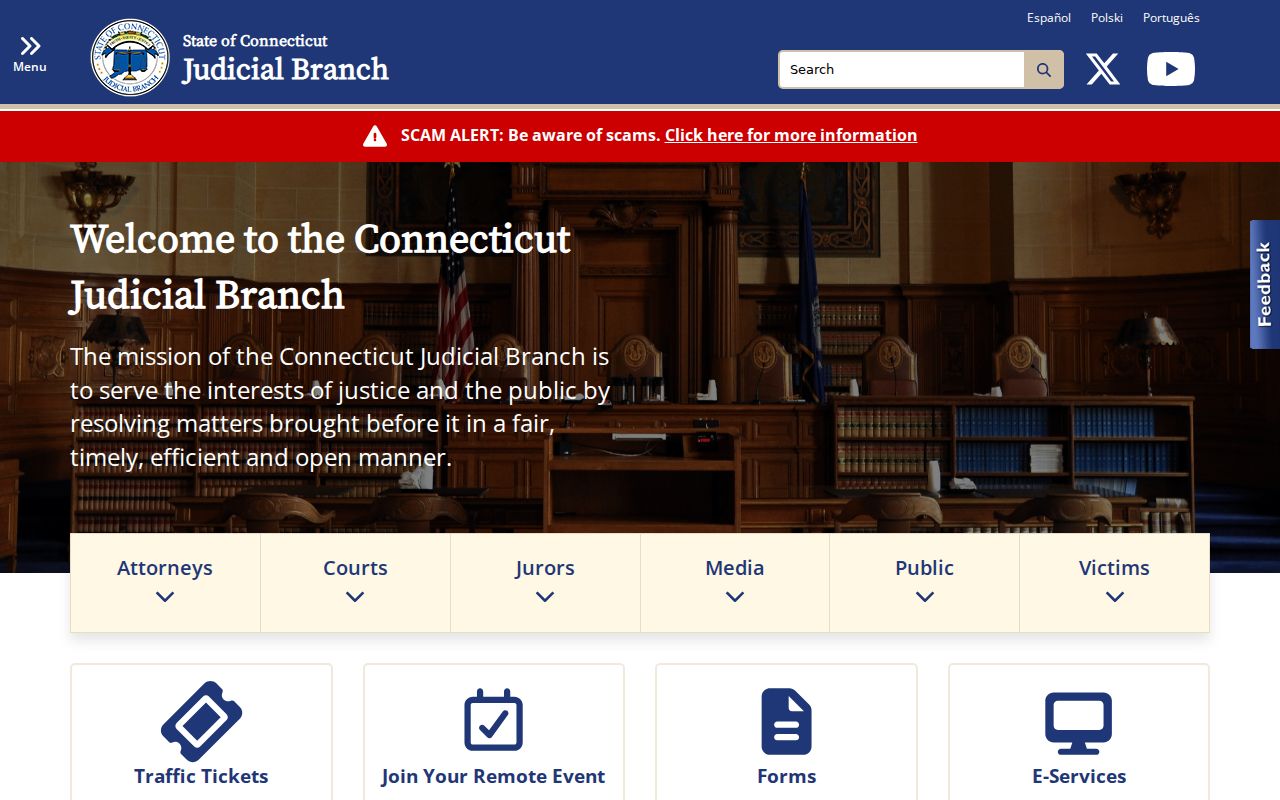
The Judicial Branch page should be used before relying on a third-party listing because court locations, case-type routing, and public counter rules can change.
Clerk of the Superior Court
Litchfield Judicial District Superior Court
50 Field Street
Torrington, CT 06790
(860) 626-2100
Divorce copy guidance from local town sources references (860) 626-2300.
Litchfield County Clerk Duties
The Clerk of the Superior Court keeps the case file and docket record for matters assigned to that court location. The clerk channel is used when a person needs certified copies, plain copies, full file inspection, older paper-file access, correction questions, sealed-file routing, or guidance on which court location holds the file. Online systems are a first step, but they do not replace the clerk for certified proof.
Town clerks serve a different role. Connecticut town clerks maintain local vital records, land records, dog licenses, and town filings. They do not maintain Superior Court criminal files, civil files, family case files, divorce decrees, or active criminal dockets. The Town of Litchfield Town Clerk is useful because it states this distinction plainly and directs divorce-decree requests to Superior Court.
The Town of Litchfield Town Clerk page is a local proof point for the boundary between town clerk records and court clerk records.
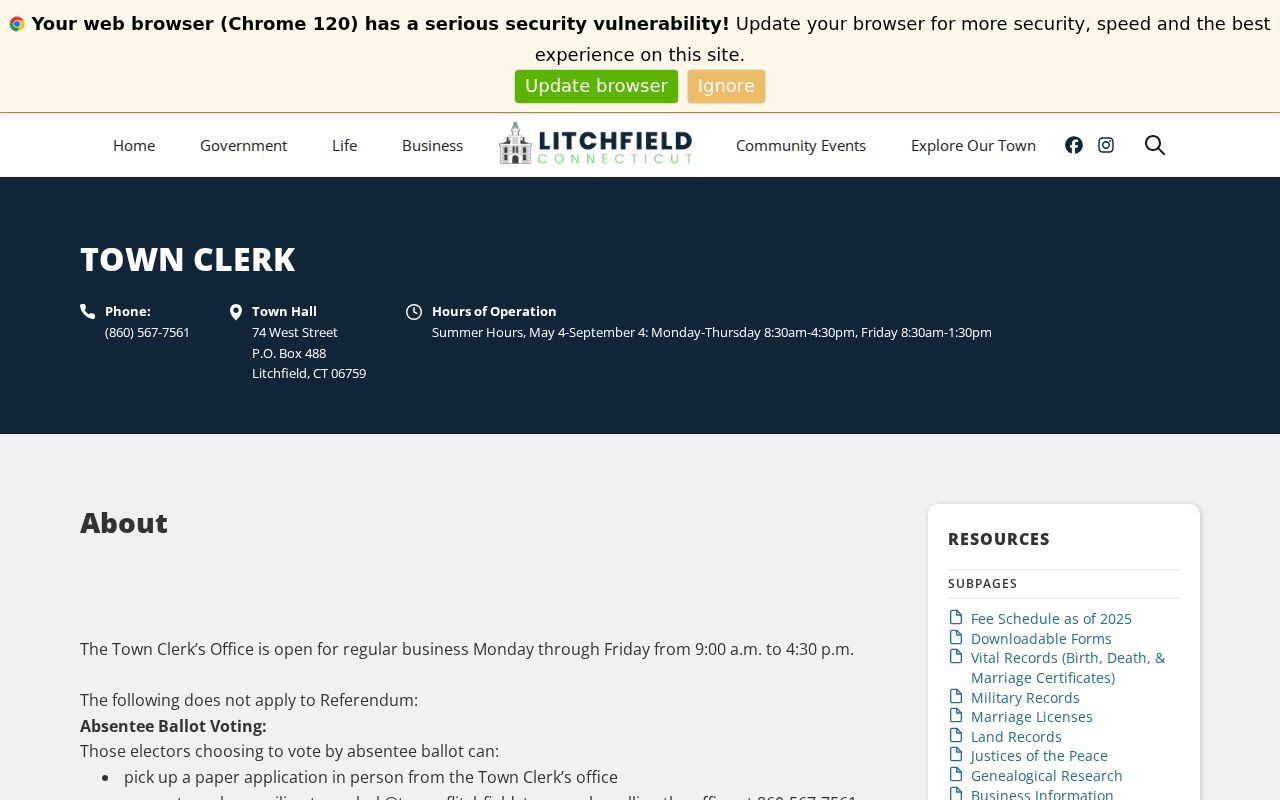
Use a town clerk for marriage certificates and town vital records, but use the Superior Court clerk for the court file or decree.
- Use civil inquiry for civil, family, housing, small claims, and court events before calling the clerk.
- Use CRDockets for criminal and motor-vehicle case status, court location, and docket numbers.
- Use the clerk for certified copies, older files, divorce decrees, and documents not shown online.
- Use Probate Court, not the Superior Court clerk, for probate district files.
- Use town clerks for marriage records and local vital records.
Request Litchfield County Court Copies
A certified copy is a court-issued copy that carries official certification for use where legal proof is required. A plain copy may be enough for personal review, but agencies, courts, employers, schools, or other institutions may require certified copies. Because the captured research did not locate a reliable Superior Court copy-fee schedule, requesters should confirm current cost, payment method, pickup, mail, and turnaround rules with the clerk before submitting a request.
- Search the Judicial Branch portal for the case type and write down the docket number.
- Confirm the court location shown on the docket, such as Litchfield Judicial District or Torrington GA 18.
- Call or visit the clerk and state whether a certified copy, plain copy, decree, or full-file inspection is needed.
- Provide party names, docket number, document title, filing year, and contact information.
- Confirm fees, payment type, delivery method, and whether photo identification is required.
Litchfield County Clerk Request Fields
Most clerk requests work best when the requester gives enough data to identify the exact case. A name alone can be too broad, especially for criminal and motor-vehicle dockets. A docket number is the strongest field because it points to the exact court record and location.
| Field | Required | Why it matters |
|---|---|---|
| Docket number | Strongly recommended | Identifies the exact Superior Court case. |
| Party names | Yes | Helps the clerk confirm plaintiff, defendant, petitioner, respondent, or defendant names. |
| Court location | Yes when known | Separates Litchfield Judicial District from Torrington GA 18 and other venues. |
| Document type | Yes | Specifies decree, judgment, disposition, motion, order, or full file. |
| Copy type | Yes | States certified copy, plain copy, or inspection request. |
| Requester contact | Yes | Lets the clerk answer fee, pickup, mail, or access questions. |
Litchfield County Clerk Fees
Research confirmed several related public-record fees, but it did not confirm the current Superior Court certified-copy fee schedule in captured official sources. The safest approach is to use verified fees only and call the Clerk of the Superior Court for court-copy amounts. Probate filing and copy fees also vary, and the Probate Court fee calculators are estimates rather than final court quotes.
| Item | Amount | Office |
|---|---|---|
| Marriage license | $50 | Town vital records office |
| Town birth, death, marriage, or civil union certificate | $20 | Town vital records office |
| State death, marriage, or civil union certificate | $20 | State Vital Records Office |
| State birth or stillbirth certificate | $30 | State Vital Records Office |
| Certified DMV driver history | $20 | DMV |
| Superior Court certified/plain copies | Confirm with clerk | Clerk of the Superior Court |
Litchfield County Clerk Access Channels
Online access is best for locating the docket number and reading public index data. Civil, family, housing, and small claims records use civil inquiry. Criminal and motor-vehicle cases use CRDockets. Probate records use ctprobate.gov tools. Warrant records use the VOP/FTA warrant tool only for the limited warrant classes it covers. Mail requests may be possible when the clerk gives payment and delivery instructions, but the research did not capture a universal mail form for Litchfield Superior Court copies.
Connecticut FOIA matters for many town, police, DMV, DOC, and other agency records. Court case files are handled through Judicial Branch access rules and clerk procedures. A request involving police reports, body-camera footage, arrest narratives, or town records may need the arresting police agency, State Police, or town office rather than the Clerk of the Superior Court.
Note: The clerk can confirm copy access, but cannot make sealed, erased, juvenile, or confidential records public without legal authority.