
Search Litchfield County Court Records
Connecticut does not operate a Litchfield County court records portal. The official starting point is the Connecticut Judicial Branch, which separates public case lookup by case type. Civil, family, housing, small claims, short calendar, court event, legal notice, and foreclosure sale records are searched in the Superior Court civil inquiry system. Criminal and motor-vehicle dockets use the separate Criminal/Motor Vehicle Case Look-up. Probate files use Connecticut Probate Court tools, and violation-of-probation or failure-to-appear warrants use a different Judicial Branch warrant search.
For Litchfield County court records, the court-location field matters. Litchfield Judicial District is the main Superior Court setting for many civil, family, divorce, and serious criminal matters. Torrington Geographical Area 18 appears in criminal and motor-vehicle searches for GA work. Searchers who know the docket number should use it first because it is the most exact identifier for later clerk calls, certified copy requests, or courthouse file review.
- Choose the record type before searching. Use civil inquiry for civil, family, housing, small claims, court events, and foreclosure notices.
- Use Criminal/Motor Vehicle Case Look-up for pending criminal cases, convictions, and motor-vehicle court matters.
- Narrow the search to Litchfield Judicial District or Torrington Geographical Area 18 when the portal offers a court-location dropdown.
- Record the docket number, party names, court location, and status shown on the public result.
- Contact the Clerk of the Superior Court for certified copies, full file inspection, older paper records, or document access not shown online.
The civil party-name search screen shows the practical name-search route for Litchfield County civil, family, housing, and small claims court records.
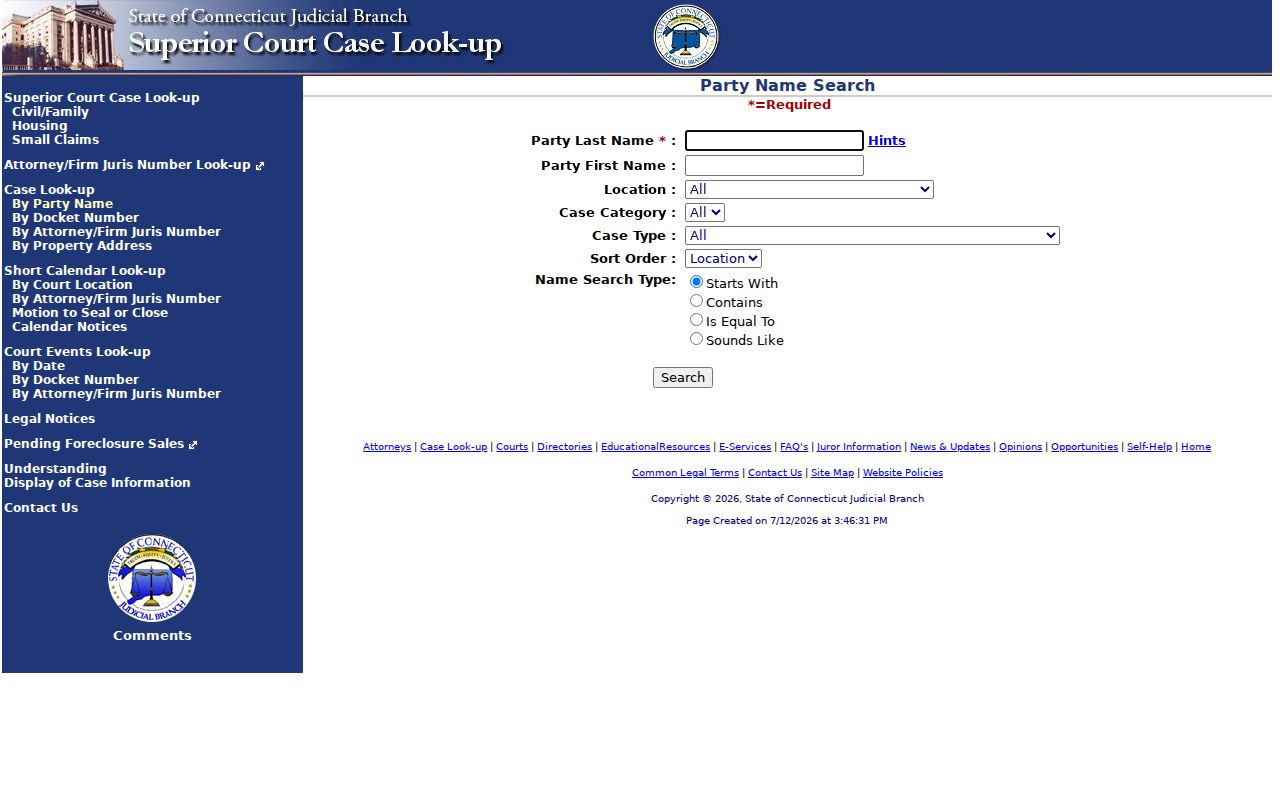
Litchfield County Court Records Fields
The civil inquiry system has more than one path because Litchfield County court records are not all searched by the same field. A foreclosure matter may be easier to find by property address. A family case may be found by party name or docket number. A short-calendar item may require court location or attorney information. The public index helps identify a case, but it does not replace the clerk's file when a certified decree, order, judgment, or complete docket package is needed.
| Field Label | Type | Required | Notes / Format |
|---|---|---|---|
| By Party Name | Tab or link | Optional route | Searches civil, family, housing, and small claims by person or entity name. |
| By Docket Number | Tab or link | Yes for docket mode | Best route when the court case number is known. |
| Attorney/Firm Juris Number | Text route | Yes for attorney mode | Requires a Connecticut attorney or firm juris number. |
| Property Address | Text route | Depends on case | Useful for some foreclosure, summary process, and property-related cases. |
| Short Calendar by Court Location | Dropdown route | Optional route | Shows short-calendar matters by selected court location. |
| Court Events by Date | Date route | Yes for event mode | Finds scheduled civil or family events by date. |
| Legal Notices | Link | No | Displays posted Judicial Branch legal notices. |
| Pending Foreclosure Sales | External route | No | Opens the public foreclosure sale list through state e-services. |
The Judicial Branch courthouse directory is the source to verify the court location connected to a Litchfield County court records result.
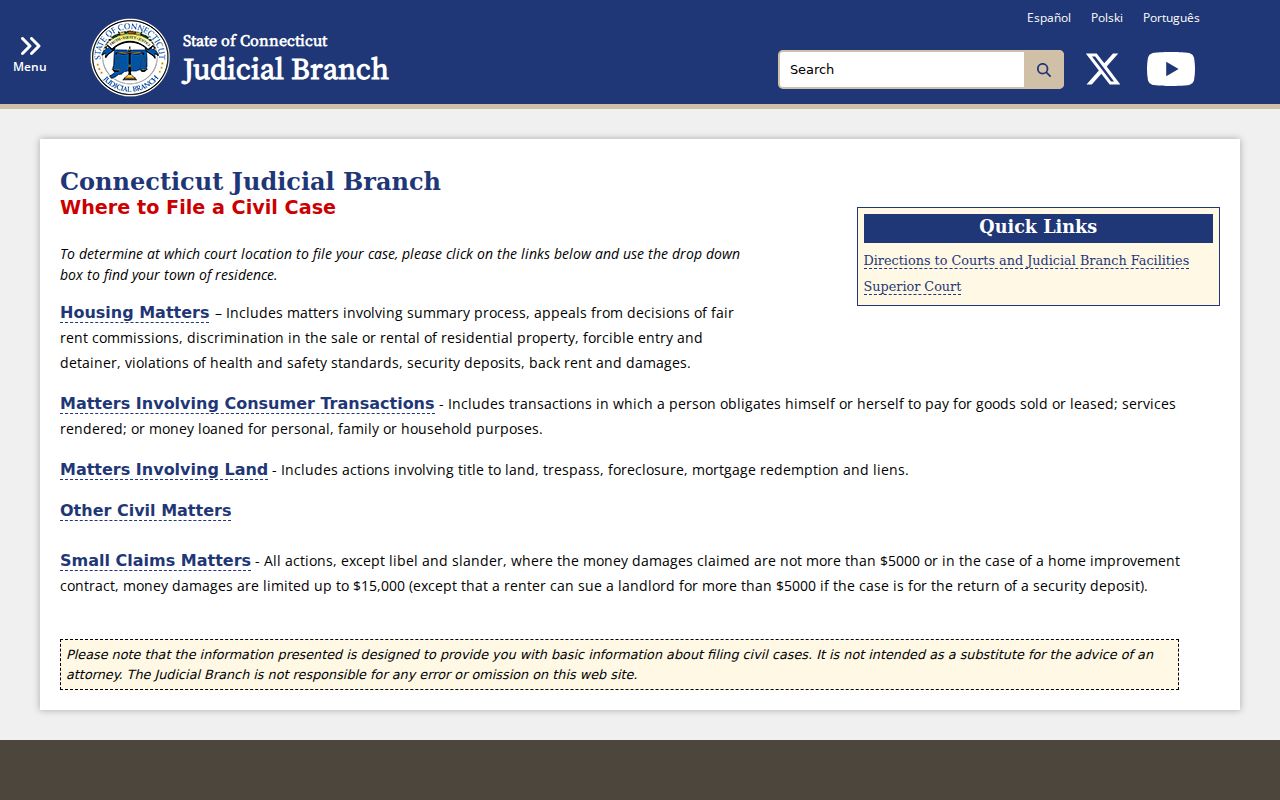
Litchfield County Court Record Types
Litchfield County court records reflect Connecticut's unified court structure. The Superior Court is the ordinary trial court for civil, criminal, family, housing, juvenile, small claims, and motor-vehicle matters. Probate Court records are separate statutory records, and town clerks keep town vital and land records rather than Superior Court case files. That split is important for divorce decrees, probate estates, marriage records, and police reports because each record has a different custodian.
Criminal court records include the prosecution case file after charges are filed. The charge list, plea, disposition, sentence, probation events, and docket history belong with the court record, while an arrest report remains a police-agency record. The full criminal case file is covered separately in Litchfield County criminal court records.
- Civil records include complaints, motions, appearances, judgments, executions, foreclosure filings, small claims, and scheduling events.
- Family and divorce records include dissolution files, custody orders, support issues, parenting plans, and judgments.
- Criminal and motor-vehicle records include charges, pleas, court dates, dispositions, sentences, probation events, and erased-record flags.
- Probate records include estates, wills, trusts, conservatorships, guardianships, name changes, and certain children's matters.
- Juvenile and mental-health-related records may have public docket limits or confidentiality rules.
What Litchfield County Court Records Show
A Litchfield County court records result may show enough information to identify a case, track a hearing, or prepare a copy request. It should not be treated as the full case file unless the portal provides the actual document or the clerk confirms the file contents. Many entries are index-level data. Common fields include the docket number, court location, case category, party names, attorney information, filing or offense dates, status, docket entries, hearing schedule, and disposition.
| Field | What It Shows |
|---|---|
| Docket Number | The core case identifier used for searches, clerk calls, and copy requests. |
| Court Location | The courthouse or court division, such as Litchfield Judicial District or Torrington Geographical Area 18. |
| Case Category | The broad case type, including civil, family, housing, small claims, criminal, motor vehicle, or probate appeal. |
| Parties | Names such as plaintiff and defendant, petitioner and respondent, or state and defendant. |
| Docket Entries | Filed appearances, motions, orders, notices, hearings, continuances, judgments, sentencing, and probation events. |
| Status | Whether the matter is pending, disposed, closed, judgment entered, sealed, erased, transferred, reopened, or stayed. |
| Financial Fields | Fines, costs, restitution, bond, judgments, executions, or foreclosure sale figures when public and applicable. |
The CourtListener search page appears in the image set as a free court-search alternative for some legal materials.
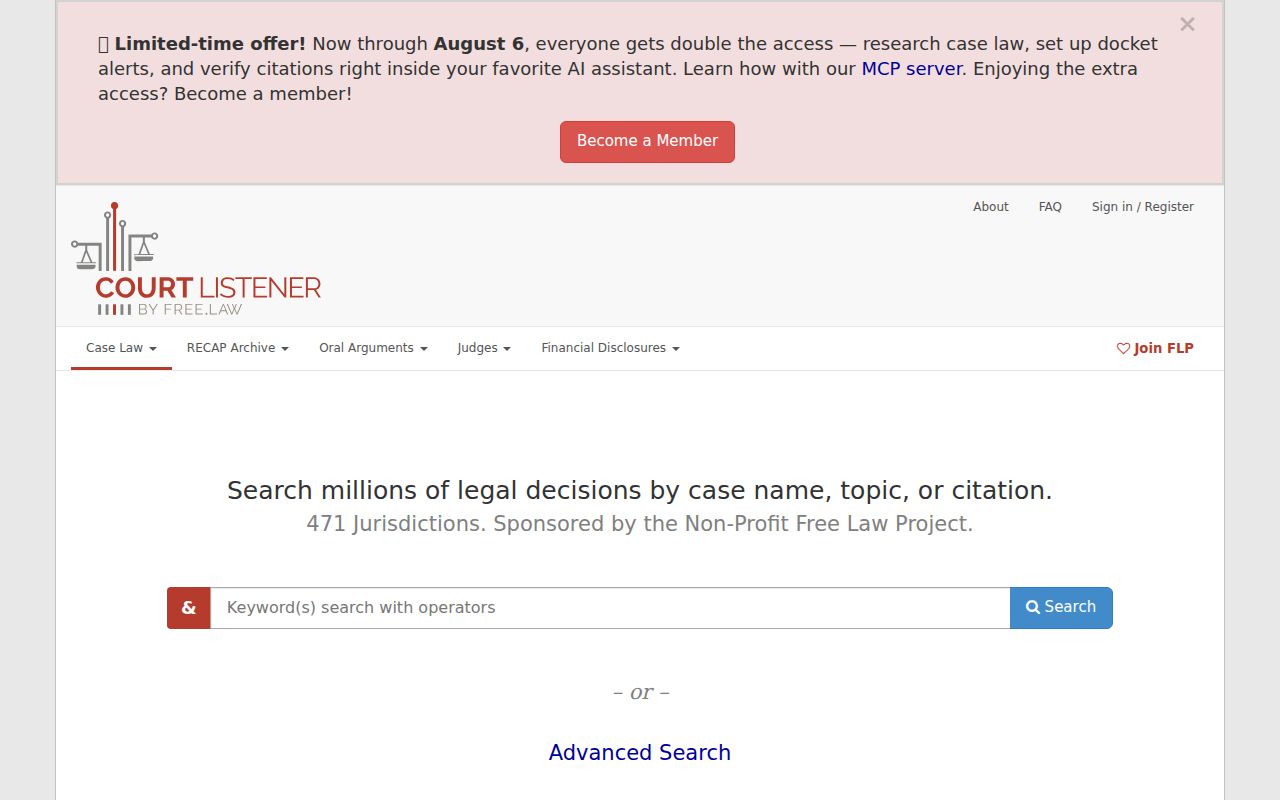
Litchfield County Court Records Access
Public access in Litchfield County starts with official Judicial Branch lookups, but access is not unlimited. Conn. Gen. Stat. Sec. 1-210 gives public access to many nonexempt public agency records, while court records follow court-specific rules and clerk procedures. Conn. Gen. Stat. Sec. 1-212 governs copies and fees for public agency records. For court files, the practical route is the clerk at the courthouse where the case is filed.
Online access is best for locating the case and reviewing public docket data. In-person or clerk contact is still needed for certified copies, older files, documents not posted online, full file inspection, sealed-file questions, and divorce decrees. The Town of Litchfield Town Clerk specifically directs divorce decree seekers to the Superior Court because town clerks do not hold Superior Court divorce case files.
The Connecticut FOIA statute is an important source for agency records, police records, town records, DOC records, and DMV records.
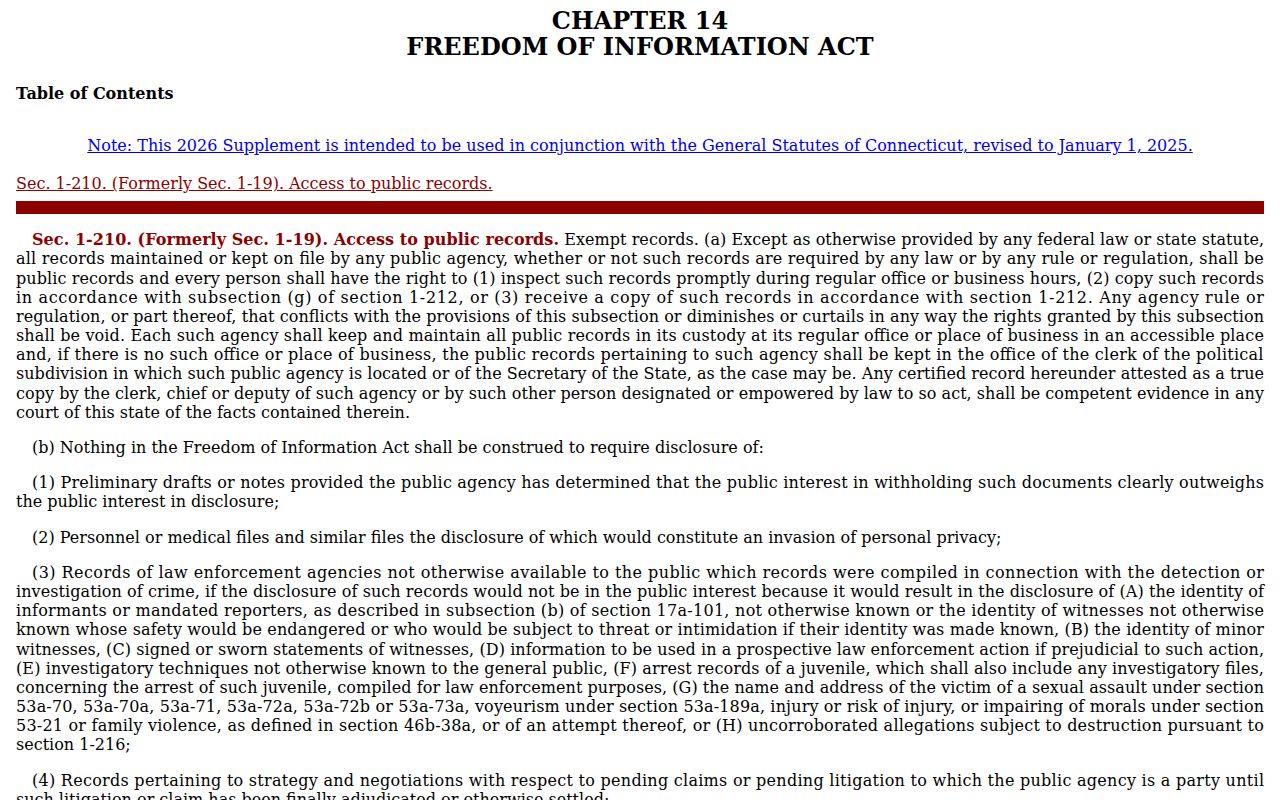
Note: Many Litchfield County court record indexes are public, but full documents can require clerk review, payment, or court permission.
Restricted Litchfield County Court Records
Some Litchfield County court records are restricted by statute, court order, or redaction practice. Juvenile matters are generally confidential under Conn. Gen. Stat. Sec. 46b-124. Erased criminal records are governed by Conn. Gen. Stat. Sec. 54-142a and related disclosure rules. A public search result may change after erasure, correction, pardon, or a court order limiting access.
Sealed records are not the same as erased records. Sealing usually means the court limits public access to a document or file because privacy, safety, juvenile, medical, fair-trial, or statutory concerns outweigh open access. Erasure is a Connecticut criminal-record-clearing concept that can limit disclosure after dismissals, acquittals, qualifying nolles, pardons, or Clean Slate categories. The person seeking access should identify the docket number, court location, and disposition first, then ask the clerk what process applies.
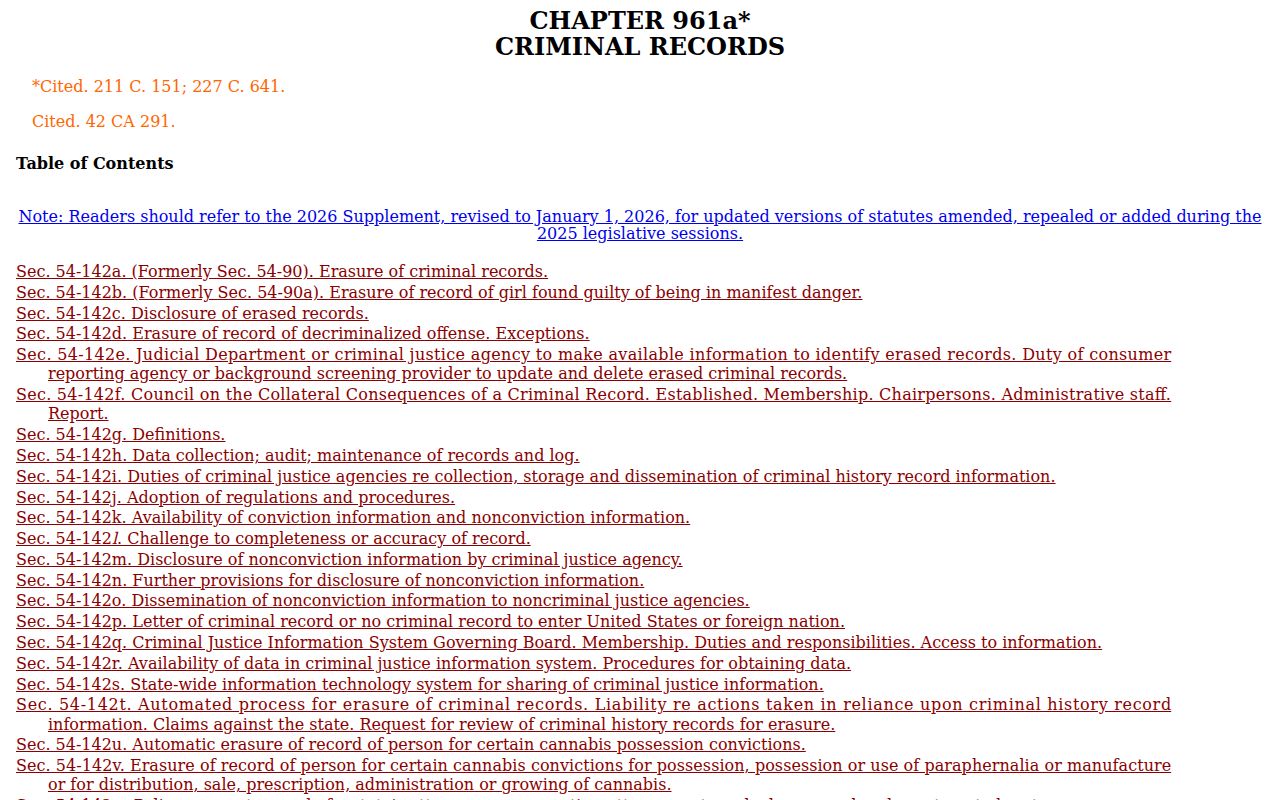
The criminal-record erasure statute is central when a Litchfield County criminal court record no longer appears in the public way.
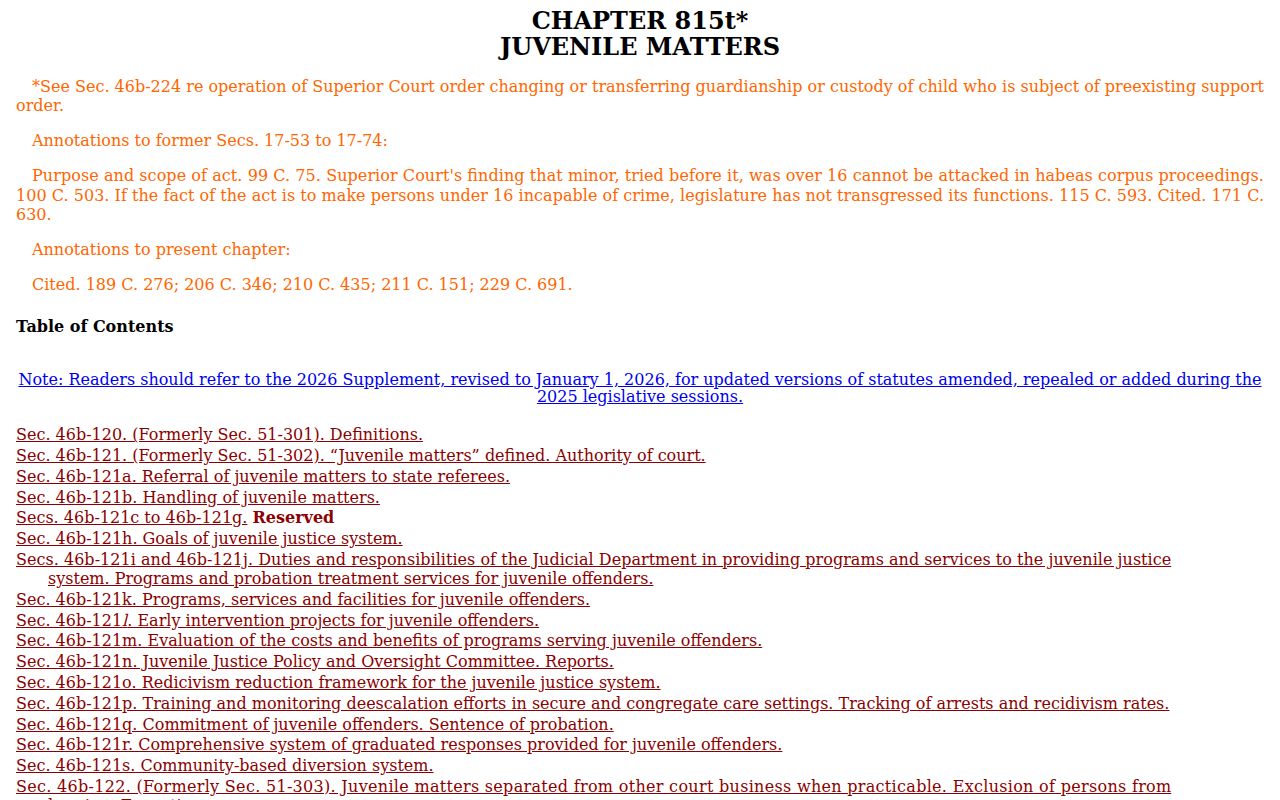
The juvenile confidentiality statute explains why juvenile Litchfield County court records should not be described as broadly searchable public records.
Litchfield County Court Records Requests
The Litchfield Judicial District Superior Court in Torrington is the main local courthouse channel for many civil, family, divorce, and serious criminal files tied to Litchfield County. Bring the docket number, party names, approximate filing year, case type, and photo identification when asking about a file. If the portal result points to Torrington GA 18, use that court location for criminal or motor-vehicle docket questions. Do not assume a town clerk can print a Superior Court divorce decree or criminal case file.
Clerk of the Superior Court
Litchfield Judicial District Superior Court
50 Field Street
Torrington, CT 06790
(860) 626-2100
Copy guidance for divorce decrees is locally referenced at (860) 626-2300.
Mail and phone copy requests depend on the holding court and record type. Ask the clerk for the exact fee, payment method, mailing address, and whether a certified copy or plain copy is needed. The public index is useful, but the clerk controls official copies.